Why Choose Injection Molding for Your Products?
Choosing injection molding can transform a product idea into thousands of consistent parts. Engineers use heated plastic pellets, carefully designed molds, and controlled cooling cycles. The result may be a phone housing, medical enclosure, appliance handle, or automotive clip. Each part can emerge with repeatable dimensions and a clean surface.
The process becomes especially valuable when demand grows. A multi-cavity mold can produce several components during one cycle, reducing labor and unit costs. Experienced manufacturers also select materials according to strength, heat resistance, flexibility, and appearance. Polypropylene may suit a lightweight container, while ABS can provide a tougher, polished housing. Quality teams inspect samples, measure critical tolerances, and monitor production records. Small changes matter. Uneven cooling can create warping, visible sink marks, or weak corners.
However, injection molding is not automatically the best choice. It is not perfect. Mold development can require significant investment, especially for complex parts with sliding cores or tight tolerances. Design mistakes may become expensive after tooling begins. A thoughtful review of wall thickness, draft angles, parting lines, and expected volume can prevent avoidable waste. Prototype testing remains useful, even when production seems straightforward. Reliable suppliers explain limitations clearly and support design adjustments with measurable evidence. Their experience should be visible in process controls, material documentation, and consistent inspection results. When product volume, durability, and repeatability justify the tooling cost, injection molding offers a practical path from a digital design to dependable physical products.
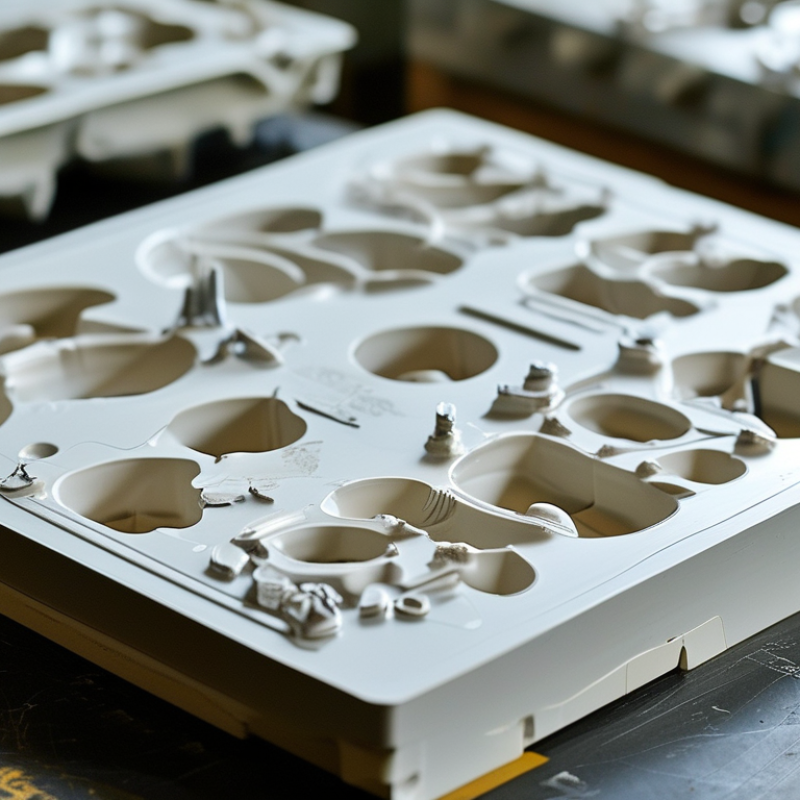
Injection Molding Explained: Four Core Steps from Filling to Ejection
Why Choose Injection Molding for Your Products?
Injection Molding Explained: Four Core Steps from Filling to Ejection
Injection molding suits products needing repeatable shapes, tight dimensions, and efficient output. Grand View Research estimated the global injection-molded plastics market at USD 261.8 billion in 2023. Its analysis forecasts a 4.8% compound annual growth rate through 2030. That scale reflects demand across packaging, medical equipment, electronics, and transport components.
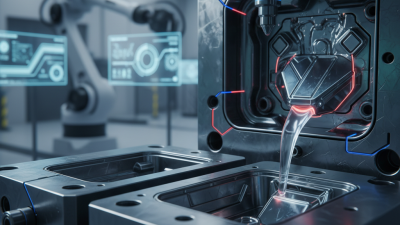
The cycle starts with clamping, when the mold halves close under controlled force. The machine then injects molten plastic through the gate and fills the cavity. Filling speed and pressure influence weld lines, trapped air, and surface quality. Holding pressure compensates for material shrinkage after filling. Cooling follows inside the mold. Cooling is unforgiving. Uneven temperature can create warpage, sink marks, or longer cycle times. Finally, ejector pins push the solidified part from the cavity. A small gate vestige may remain, even after careful tuning.
In production reviews, I check melt temperature, injection pressure, cooling time, and part weight together. One number rarely explains a defect. The 2023 Plastics—The Facts report recorded 400.3 million tonnes of global plastics production in 2022, showing the scale behind high-volume processing. Yet market forecasts can hide practical weaknesses. A faster cycle may increase distortion or rejected parts. I treat first-shot data as a question, not proof. Tool balance, resin moisture, and operator adjustments still deserve close attention.
How 10–60-Second Cycles Support Fast, Repeatable Production
Why Choose Injection Molding for Your Products?
How 10–60-Second Cycles Support Fast, Repeatable Production
Injection molding turns heated polymer into consistent parts within tightly controlled cycles. A 10-second cycle can produce 360 shots per hour. A 60-second cycle produces 60 shots. With an eight-cavity mold, that equals 480 to 2,880 parts hourly, before planned downtime.
This speed supports stable production planning. Mold temperature, injection pressure, cooling time, and material moisture affect every cycle. Modern process monitoring can record these variables for each shot. According to the 2024 Plastics Industry Association Size and Impact report, U.S. plastics manufacturing generated approximately $555.9 billion in shipments during 2023. Such scale demands repeatable processes, not just faster machines.
Cycle speed also reduces labor exposure per part. Automated feeding and part removal can keep production moving through long shifts. However, short cycles are not automatically better. Excessive speed may create warpage, sink marks, or incomplete filling. A slightly slower cycle can protect quality and reduce scrap. The 2024 Plastics—The Fast Facts report from the European plastics industry recorded about 54 million tonnes of plastics production in Europe during 2023. That volume highlights why small process losses matter.
The practical target is balance. Fast enough. Stable enough. A well-tuned 10–60-second cycle can deliver repeatable output, but real performance depends on geometry, resin, mold design, and cooling efficiency. Trial data should guide the final setting. Our assumptions may need revision.
Why Choose Injection Molding for Your Products? - How 10–60-Second Cycles Support Fast, Repeatable Production
| Cycle Time |
Theoretical Output
per Hour |
Theoretical Output
per 8-Hour Shift |
Estimated Output at
85% Utilization |
Typical Production Fit |
Repeatability Benefit |
| 10 seconds |
360 cycles |
2,880 cycles |
2,448 cycles |
Very high-volume, small-part production |
Consistent automated cycle control supports uniform dimensions |
| 20 seconds |
180 cycles |
1,440 cycles |
1,224 cycles |
High-volume consumer and industrial components |
Stable cooling and filling conditions help reduce part-to-part variation |
| 30 seconds |
120 cycles |
960 cycles |
816 cycles |
General-purpose housings, fittings, and functional parts |
Repeatable mold closure, injection, and ejection sequence |
| 45 seconds |
80 cycles |
640 cycles |
544 cycles |
Medium-sized or more complex molded components |
Longer cooling time can improve dimensional stability |
| 60 seconds |
60 cycles |
480 cycles |
408 cycles |
Larger parts, thicker sections, or multi-feature designs |
Additional cooling time can help control warpage and shrinkage |
Calculation basis: Theoretical output is calculated as 3,600 seconds divided by cycle time. The 8-hour shift includes 28,800 seconds of scheduled production time. The utilization estimate assumes 85% productive operating time after accounting for normal handling, inspection, material changes, and minor interruptions. Actual output varies with mold cavities, part geometry, material, machine size, cooling requirements, and automation level.
Why 100,000+ Parts Can Lower Per-Unit Costs After Tooling Investment
Why Choose Injection Molding for Your Products?
Why 100,000+ Parts Can Lower Per-Unit Costs After Tooling Investment
Injection molding becomes financially attractive when production volume absorbs the tooling investment. A mold costing $25,000 adds $2.50 per part at 10,000 units. At 100,000 units, that same tooling adds only $0.25 per part. Material, labor, machine time, packaging, and inspection still matter. However, the fixed cost becomes less dominant.
The Plastics–the Facts 2023 industry report estimated global plastics production at 400.3 million tonnes in 2022. That scale reflects mature, high-volume manufacturing demand. Injection molding supports repeatable cycles, automated handling, and consistent dimensions across large batches. Small cycle-time improvements can matter. Saving two seconds across 100,000 parts creates substantial machine capacity.
The 100,000-part threshold is not universal. Product geometry, resin choice, mold complexity, cavity count, and expected scrap can change the calculation. A simple housing may break even earlier. A large, textured part may require much higher volume. Tooling changes are also expensive after production begins. That assumption deserves checking before approval. A practical costing model should compare several volumes, including 10,000, 50,000, and 100,000 parts, while allowing for defects, maintenance, and possible design revisions.
How 0.5–3% Material Shrinkage Affects Design Accuracy and Part Quality
Shrinkage is not a defect by itself. It is a predictable change during injection molding. Most thermoplastics contract as they cool inside the mold. A quoted range of 0.5–3% can change a 100-millimeter housing by 0.5 to 3 millimeters. That difference can affect clips, seals, screw holes, and mating panels. Tiny errors become visible quickly. Engineers should not scale every dimension equally. Flow direction, wall thickness, fiber orientation, and cooling speed can create uneven shrinkage. A thick boss may cool later than a thin wall. It can pull the nearby surface inward. That creates sink marks or slight warpage.
Accurate design starts with material-specific shrinkage data and mold-flow review. Designers should add draft angles, balanced walls, and properly sized ribs. Ribs that are too thick often leave visible depressions. Gate location also matters because pressure and cooling vary across the cavity. Mold steel may require intentional compensation, yet the correction should follow measured results. First-shot parts rarely tell the whole story. Measure critical features with calibrated tools after stable conditioning. Check parts at the intended assembly temperature. Moisture-sensitive materials need controlled drying before molding. I have seen a part pass dimensional inspection, then fail assembly after cooling overnight. The lesson is uncomfortable: a perfect CAD model cannot guarantee a perfect molded part.
When 70–140 MPa Injection Pressure and ±0.05 mm Tolerances Matter
Why Choose Injection Molding for Your Products?
When 70–140 MPa Injection Pressure and ±0.05 mm Tolerances Matter
Injection molding suits products that need repeatable geometry, clean surfaces, and controlled unit costs. Pressures between 70 and 140 MPa can fill narrow ribs, bosses, and compact housings. These pressures also expose weak tooling decisions quickly. Poor venting may create burns, short shots, or visible weld lines.
A ±0.05 mm tolerance is achievable, but it is not automatic. Mold steel, resin shrinkage, cooling balance, and machine calibration all affect the result. ISO 20457 provides guidance for tolerances on injection-molded plastic parts. A capable supplier should verify critical dimensions with calibrated equipment. Process capability data, such as Cpk, matters more than a single approved sample. PlasticsEurope’s Plastics—The Fast Facts 2024 reported 413.8 million tonnes of global plastics production in 2023. That scale reflects molding’s continuing industrial importance, but volume alone does not guarantee precision.
Tips: Define critical dimensions before mold design. Request a dimensional report from first-shot trials. Confirm resin grade, moisture control, and cooling time. Use steel-safe machining where possible. It allows adjustment later. Still, ±0.05 mm may be excessive for hidden features. Reconsidering that tolerance can reduce tooling cost and improve production stability. Thin walls can warp, even under excellent pressure control. Small changes matter.