
What Are the Top Wholesale Bags for Chemicals Buyers?
Choosing suitable Wholesale Bags For Chemicals requires more than comparing prices or printed specifications. Chemical buyers must consider material compatibility, load capacity, moisture protection, static control, and handling conditions. A bag that performs well with dry minerals may fail with fine powders or moisture-sensitive compounds. Small details matter.
Experienced purchasing teams usually review the product’s Safety Data Sheet, filling method, storage period, and transport environment before selecting packaging. Woven polypropylene bags, kraft paper sacks, FIBCs, and barrier-lined options can serve different requirements. Some products need polyethylene liners for stronger moisture resistance. Others require antistatic or conductive designs to reduce handling risks in approved industrial environments. Clear labeling and batch traceability also support safer warehouse operations.
A reliable supplier should provide consistent dimensions, documented quality checks, and practical samples for testing. Certifications may help, but they should match the buyer’s market and application. Do not assume one certificate proves universal suitability. That assumption can create expensive problems. Buyers should verify seam strength, liner fit, closure performance, and pallet stability before placing large orders. A simple trial can reveal dust leakage around the top seam or deformation after stacking. These observations are often more useful than attractive product photographs.
This guide examines the top wholesale bag types for chemical buyers, focusing on performance, customization, supplier reliability, and responsible purchasing decisions. No packaging option is perfect. The right choice depends on the chemical, process, and storage conditions.
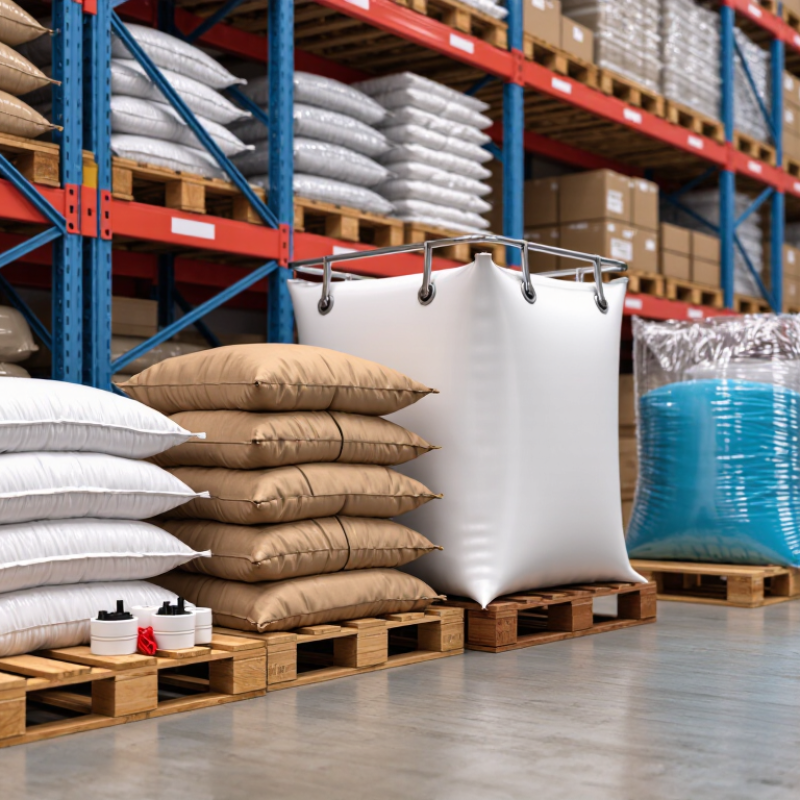
Understanding Wholesale Chemical Bag Types and Their Core Uses
What Are the Top Wholesale Bags for Chemicals Buyers?
Chemical buyers usually choose bags by material compatibility, load weight, moisture exposure, and handling conditions. Woven polypropylene bags suit many dry powders and granules. They offer strong seams and practical stacking performance. A polyethylene liner adds protection when humidity or contamination is a concern.
Multiwall paper bags can support dry mineral products, additives, and other non-reactive powders. They are easier to print and handle, but moisture can weaken them quickly. Flexible intermediate bulk containers, often called FIBCs, work well for larger volumes. Their lifting loops help warehouse teams move heavy contents safely. Conductive or antistatic designs may be necessary near sensitive equipment. The correct choice depends on the chemical’s properties, not only its price.
Tips: Request compatibility data before placing a wholesale order. Check liner thickness, seam strength, filling method, and discharge design. Ask for production samples and inspect them with the actual material. Small errors matter. Keep bags dry, sealed, and away from sharp surfaces. Confirm labeling and transport requirements for your region. These checks support traceability and safer handling.
In practice, no bag is perfect. A stronger outer layer may increase cost or reduce flexibility. A thin liner may fit better but provide less protection. Buyers should record field results, including leakage, dust release, and stacking changes. This evidence improves future purchasing decisions. Fit matters.
What Are the Top Wholesale Bags for Chemicals Buyers? - Understanding Wholesale Chemical Bag Types and Their Core Uses
| Wholesale Bag Type | Common Construction | Typical Capacity | Core Chemical Uses | Key Advantages | Important Considerations |
|---|---|---|---|---|---|
| Woven Polypropylene FIBC | Woven polypropylene fabric with lifting loops, an inlet and a discharge outlet; may include an inner liner. | Approximately 500–2,000 kg, depending on design and safe working load. | Powdered chemicals, mineral additives, pigments, fertilizers, resins and industrial salts. | High-volume handling, efficient storage, lower packaging weight and compatibility with forklift or crane handling. | The fabric is not automatically airtight or moisture-proof. Select a suitable liner and verify the safe working load before use. |
| Lined FIBC for Fine Powders | Woven polypropylene outer body combined with a polyethylene or other specified flexible inner liner. | Approximately 500–2,000 kg. | Fine powders, hygroscopic materials, powdered additives, carbon black and products requiring reduced dust leakage. | Improved containment, reduced product loss and better protection against external moisture when properly closed. | Liner material and thickness must be checked for chemical compatibility, temperature limits and filling or discharge requirements. |
| UN-Certified FIBC | Tested bulk bag designed and marked for specified dangerous goods, often with a liner and controlled construction. | Commonly 500–1,500 kg, subject to the certification and product classification. | Certain regulated solid chemicals classified for transport as dangerous goods. | Provides a standardized packaging option when the bag, filling method and contents meet the applicable UN requirements. | Certification is specific to the packaging design and approved contents or packing group. Confirm current transport regulations and marking requirements. |
| Conductive or Antistatic FIBC | Woven polypropylene body with conductive threads, dissipative fabric or other static-control construction. | Approximately 500–2,000 kg. | Combustible powders or chemicals handled in areas where electrostatic discharge must be controlled. | Helps manage electrostatic charge when correctly grounded and used within a documented handling system. | Different construction categories have different grounding requirements. A risk assessment is essential, especially in potentially explosive atmospheres. |
| Polyethylene Liner Bag | Flexible polyethylene film bag used independently for smaller loads or as a liner inside a woven outer bag. | Approximately 5–1,000 kg, depending on film thickness and format. | Powders, granules, flakes and moisture-sensitive chemical materials. | Good moisture barrier, flexible sealing options and relatively simple product-contact customization. | Polyethylene is not suitable for every chemical, temperature or concentration. Confirm permeation, stress-cracking and seal performance. |
| Valve-Type PP Bag | Multi-layer or woven polypropylene bag with a filling valve and, where required, a separate discharge feature. | Approximately 10–50 kg. | Cementitious chemicals, mineral powders, construction additives, fillers and dry processing compounds. | Fast automated filling, consistent dimensions and efficient palletization for high-volume distribution. | Valve closure and dust control depend on the filling equipment and bag design. Check seam strength and moisture protection. |
| Multiwall Paper Bag with Inner Liner | Several paper plies with a polyethylene or other specified liner; commonly supplied with a sewn or pasted closure. | Approximately 10–50 kg. | Dry powders, mineral chemicals, pigments, additives and products requiring stackable retail or industrial sacks. | Good printability, stable pallet stacking and convenient manual or automated handling. | Paper can be affected by humidity and abrasion. The liner, closure and storage environment should match the chemical’s moisture sensitivity. |
| Heavy-Duty Woven PP Sack | Coated or uncoated woven polypropylene sack with stitched seams and optional liner or laminated surface. | Approximately 20–100 kg. | Granular fertilizers, chemical pellets, industrial minerals and coarse powdered materials. | Durable, reusable in suitable applications, resistant to ordinary handling abrasion and suitable for palletized shipments. | Coating improves moisture resistance but does not make the sack universally leakproof. Inspect seams and closures for fine or hazardous powders. |
| Small-Format Chemical Pouch | Heat-sealable mono-material or laminated flexible film, selected according to barrier and compatibility needs. | Approximately 0.1–5 kg. | Laboratory chemicals, water-treatment powders, specialty additives and controlled-use chemical samples. | Low material consumption, accurate portioning, easy labeling and convenient secondary packaging. | Seal integrity, film barrier, child-resistant features and transport classification may be critical for hazardous contents. |
| Dissolvable or Water-Soluble Bag | Film made from a water-soluble polymer, commonly used as a pre-measured inner package inside protective secondary packaging. | Often approximately 0.1–5 kg per inner bag, depending on formulation and handling method. | Pre-measured cleaning chemicals, treatment compounds and selected water-dispersible formulations. | Reduces direct handling and can support controlled dosing when the product and process are designed for dissolution. | Moisture exposure, dissolution temperature, storage humidity and chemical compatibility must be validated before commercial use. |
Note: Capacity ranges are indicative wholesale-market ranges. Final bag selection should be based on chemical compatibility, particle size, moisture sensitivity, dust behavior, safe working load, filling equipment, storage conditions and applicable transport regulations.
Submit a quote request or book a design consultation
Plastimold Products is an end-to-end product development and manufacturing team. We provide product design, engineering, prototyping, tooling, plastic injection molding, assembly, packaging and fulfillment. We work with any size company from start-ups to enterprises from all around the world.
I have a product I want to manufacture
I have a product that is already designed and now needs to be manufactured.
I need a manufacturer to optimize my product for injection molding, help choose the correct material, and manage the product production.
I have tooling that I want to transfer or modify, or I need to produce new tooling.
I need design and engineering support
I have a product concept that I want to be designed and brought to market.
I have a product that needs to be reviewed, improved or DFM’ed.
I am looking for a manufacturer to provide an end-to-end solution, from design and development to inventory, marketing, and sales.

©2022 Plastimold Products - Privacy policy - Terms and Conditions