
How to Choose the Best PE Coloring Masterbatch?
Choosing the right Pe Coloring Masterbatch is not simply a matter of selecting the brightest pellet. The correct option must suit the polyethylene grade, processing temperature, product design, and final use. A color that looks excellent in a supplier’s sample may appear weaker in a thin film or uneven in a molded cap.
In production, small differences matter. A slight carrier mismatch can create specks, streaks, or poor dispersion. Excessive dosage may increase cost and sometimes affect mechanical performance. The best evaluation begins with practical details: resin compatibility, recommended addition rate, pigment stability, and required color tolerance. Ask for a technical data sheet, certificate of analysis, and processing guidance. Reliable suppliers should explain their test methods instead of promising universal performance.
Test it in your process.
A controlled trial using the actual polyethylene grade can reveal more than a color card. Check melt flow, dispersion, surface appearance, odor, and color consistency after cooling. For outdoor products, include weathering data. For regulated applications, verify the relevant compliance documents rather than relying on general claims. Standards and market requirements can differ by region.
There is no flawless masterbatch for every application. Even careful testing can miss a problem when production conditions change. That is why records, repeat trials, and supplier communication remain important. This guide explores how to compare Pe Coloring Masterbatch options with practical judgment, technical evidence, and a willingness to question attractive but incomplete specifications.
Understanding PE Coloring Masterbatch and Its Main Functions
How to Choose the Best PE Coloring Masterbatch?
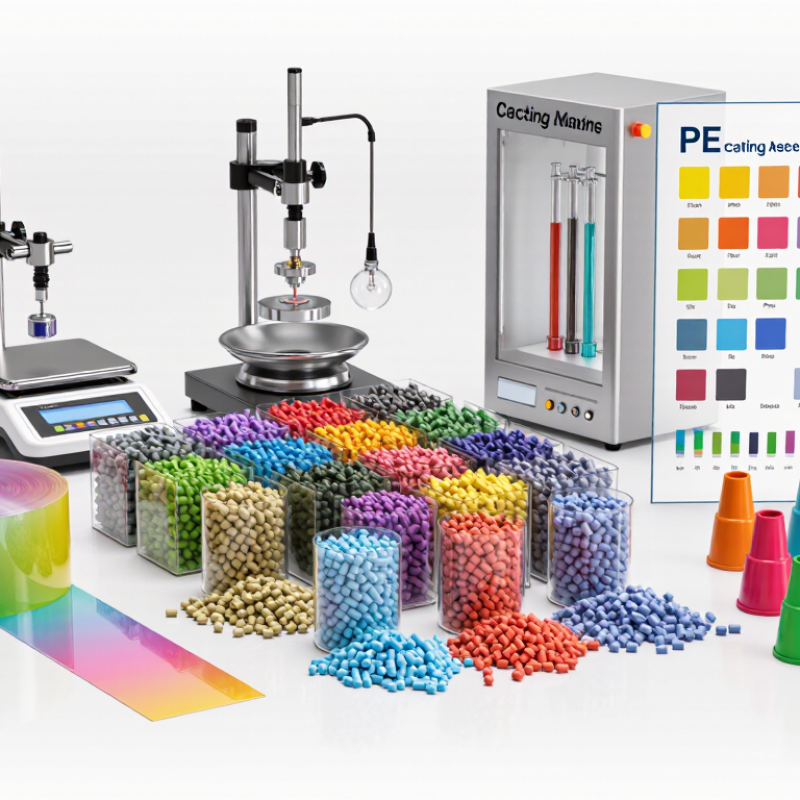
PE coloring masterbatch is a concentrated blend of pigments, additives, and polyethylene carrier resin. It gives films, bottles, pipes, and molded parts consistent color during processing. Its main functions include coloring, improving dispersion, and sometimes supporting UV resistance or processing stability. Plastics Europe reported 413.8 million tonnes of global plastics production in 2023, showing the scale of demand for reliable color control. Still, color is not only an appearance issue. Poor dispersion can create streaks, weak spots, or unstable shade.
In production trials, I check the carrier compatibility before judging the pigment. A masterbatch designed for PE should melt within the process window and avoid excessive pressure or filter blockage. Pigment loading also matters. Too much pigment may increase cost and reduce mechanical performance. According to Grand View Research, the global masterbatch market was valued at approximately USD 12.7 billion in 2023, reflecting strong demand for functional and decorative concentrates. However, market growth does not guarantee every formulation will suit your equipment. That part requires testing.
Tips: Compare a molded sample under daylight and indoor lighting. Measure color with a spectrophotometer, not only by eye. Test the final dilution ratio, melt temperature, screw speed, and recycled content. Keep one approved reference plaque. A perfect match is rarely perfect. In my view, that is where many purchasing decisions become too optimistic. A small trial can reveal odor, migration, or shade drift before full production.
How to Choose the Best PE Coloring Masterbatch
Typical pigment or additive loading ranges help compare color strength, opacity, UV protection, and formulation flexibility when selecting a polyethylene coloring masterbatch. Actual values vary according to pigment grade, carrier resin, dispersion quality, and the final let-down ratio.
White masterbatch commonly uses high titanium dioxide loading for opacity, while carbon black provides strong coloration and UV-screening performance at lower concentrations. Organic and inorganic pigments offer different balances of brightness, heat resistance, weatherability, and cost. For PE applications, always confirm carrier compatibility, processing-temperature stability, color dispersion, and regulatory requirements.
Identifying the Right Color, Polymer Type, and Application Requirements
How to Choose the Best PE Coloring Masterbatch?
Choosing a PE coloring masterbatch starts with the final color, not the pigment catalogue. Define the target under daylight, store lighting, and production conditions. CIELAB values and a controlled ΔE limit make approval more objective. A bright red may look correct on a white plaque but darker in a thin film. That difference is easy to underestimate.
Match the carrier polymer to the PE grade and process. LDPE and LLDPE films need strong dispersion without blocking or excessive die buildup. HDPE injection parts usually require higher thermal stability and consistent flow. Check melt flow behavior against the base resin, using methods such as ASTM D1238. The carrier should melt and distribute smoothly. It sounds obvious, yet many color failures begin with a poor polymer match.
Application demands should guide pigment selection, loading, and testing. Outdoor products need resistance to heat, light, and weathering. Packaging films need low migration and stable shade during fast extrusion. Recycled PE adds another variable. The OECD Global Plastics Outlook reports that only 9% of global plastic waste was recycled in 2019, so recycled feedstock can bring changing background colors and contamination. PlasticsEurope reported 413.8 million tonnes of global plastics production in 2023. This scale makes process consistency important. A laboratory match can still fail on the factory floor. Test actual resin, thickness, temperature, and residence time before approval. Also question the first successful result. It may not remain successful.
Evaluating Pigment Quality, Dispersion, and Color Consistency
Choosing a PE coloring masterbatch starts with pigment quality, not a bright catalog chip. A reliable pigment should resist heat, migration, and fading during processing and storage. Ask for technical data covering heat stability, lightfastness, and chemical resistance. Small samples can reveal weaknesses. I usually compare molded plaques after controlled exposure, not just fresh pellets. The brightest sample may age poorly. It is an easy mistake.
Dispersion deserves equal attention. Poorly dispersed pigment can create specks, streaks, or uneven opacity in film and molded parts. Examine a thin film under consistent lighting. Then inspect a cut section with magnification. A good concentrate distributes smoothly at the recommended let-down ratio. Check filter pressure during extrusion, too. Rising pressure may indicate agglomerates. Processing conditions matter. Even good material can fail when the carrier resin is incompatible with the PE grade. I have seen this happen after a rushed trial.
Color consistency needs measurement. Use a calibrated spectrophotometer and record L*, a*, and b* values across production lots. Set a realistic tolerance before ordering. Compare samples from the beginning, middle, and end of a run. Keep the same temperature, screw speed, film thickness, and lighting. Otherwise, the numbers can mislead. Request a retained reference sample and batch documentation. Supplier confidence is useful, but repeatable evidence is stronger. Recheck after storage; color can shift quietly.
Checking Compatibility, Processing Performance, and Additive Content
How to Choose the Best PE Coloring Masterbatch?
Compatibility should be checked before color strength. Match the masterbatch carrier with the polyethylene grade whenever possible. A similar melt flow rate usually supports smoother dilution and more stable dispersion. In a laboratory trial, mix the masterbatch at the planned let-down ratio, then inspect film or molded samples for streaks, gels, and uneven color. Watch the surface closely. Poor compatibility can also reduce impact strength, sealing quality, or gloss. Resin type matters too. A masterbatch suitable for HDPE may not perform equally in LLDPE or recycled PE.
Processing performance becomes clear on the production line. Check the recommended processing temperature, shear sensitivity, and residence time. Excessive heat may fade sensitive pigments or damage additives. Insufficient mixing can leave visible specks. Clean equipment helps. Record screw speed, melt temperature, output, and pressure during the trial. Small changes can reveal whether the formulation is stable. A higher pigment loading is not automatically better. It may increase viscosity or create dispersion problems.
Additive content needs equal attention. Confirm the levels of UV stabilizers, slip agents, antiblock agents, or processing aids. Too much additive can cause migration, surface deposits, odor, or unstable friction. Request a current technical data sheet, safety information, and batch testing records. Verify color difference with an instrument, not only by eye. I have seen acceptable samples fail after storage because additive interactions were overlooked. That mistake is easy to repeat. Run aging and application-specific tests before approving regular production.
Comparing Suppliers, Testing Samples, and Making the Final Selection
Choosing the best PE coloring masterbatch depends on more than shade and price. Supplier evaluation should begin with technical evidence. Ask for a consistent technical data sheet, batch records, recommended let-down ratios, and storage guidance. Experienced suppliers should explain pigment dispersion, carrier compatibility, and processing limits clearly.
Request samples from at least three suppliers. Use the same PE resin, equipment, dosage, and processing temperature for every trial. Record melt pressure, color strength, surface appearance, and filter performance. Check molded parts under daylight and standard lighting. A small color difference may appear significant after cooling. Do not ignore odor, specks, streaks, or die build-up.
Test more than one production batch. One sample can look perfect by chance. We once accepted a masterbatch after a smooth trial, but a second batch produced uneven color at the same dosage. That mistake changed our approval process. Now, we compare samples after storage and repeated processing. No test is perfect.
Create a practical scorecard covering color accuracy, dispersion, processing stability, documentation, delivery consistency, and total cost. Price matters, but unstable dosing creates waste and downtime. Ask how quickly the supplier handles technical questions. Their response often reveals more than a sales quotation. Select the supplier that performs reliably across realistic production conditions, not only in a polished laboratory trial.
| Evaluation Dimension | Recommended Target for PE Processing | Test Method or Verification | Weight | Sample A | Sample B | Sample C | Sample D | Selection Guidance |
|---|---|---|---|---|---|---|---|---|
| Carrier Compatibility | Polyethylene-based carrier or a carrier proven compatible with the selected PE resin | Supplier technical data sheet; trial in the actual LDPE, LLDPE, or HDPE grade | 15% | PE carrier confirmed | PE carrier confirmed | Universal carrier | PE carrier confirmed | Prefer a carrier that matches the base resin to reduce phase separation and surface defects. |
| Pigment Loading | Consistent pigment concentration with a clear recommended let-down ratio | Certificate of analysis and gravimetric verification where required | 10% | 45% | 50% | 40% | 50% | Higher loading does not automatically mean better performance; evaluate color strength at the same dosage. |
| Color Strength | At least 95% of the approved reference at the agreed let-down ratio | Instrumental comparison against an approved color standard | 15% | 98% | 96% | 93% | 99% | Samples below the agreed strength should be rejected or technically requalified. |
| Color Difference | ΔE00 ≤ 1.0 for a critical color; ΔE00 ≤ 1.5 for a general industrial color | 分光测色仪 using CIE L*a*b* and CIEDE2000 calculation | 15% | 0.62 | 0.88 | 1.34 | 0.54 | Use the same film thickness, substrate, lighting condition, and measurement geometry for every sample. |
| Dispersion Quality | No visible agglomerates; uniform color with no streaks, specks, or die build-up | Microscopic film inspection and production-line trial | 15% | No visible specks | Minor specks | Occasional streaks | No visible specks | Dispersion should be checked at the intended processing speed and screw configuration. |
| Moisture Content | Preferably ≤ 0.15% before processing, unless the formulation specifies otherwise | Karl Fischer titration or validated moisture analyzer | 8% | 0.08% | 0.11% | 0.18% | 0.07% | Excess moisture may cause bubbles, silver streaks, and unstable extrusion. |
| Melt Flow Behavior | Stable flow at the selected processing temperature and compatible with the PE resin | ASTM D1238 or ISO 1133; compare with the base resin and processing conditions | 8% | 18 g/10 min | 22 g/10 min | 7 g/10 min | 20 g/10 min | Large flow differences can affect dosing, mixing, extrusion pressure, and final thickness. |
| Heat Stability | No visible shade shift or degradation during the complete residence time | Step-heating trial at the actual processing temperature; compare ΔE00 before and after heating | 7% | ΔE00 0.48 | ΔE00 0.73 | ΔE00 1.42 | ΔE00 0.39 | Confirm suitability for the highest temperature and longest residence time used in production. |
| Migration and Bleeding Risk | No visible bleeding, blooming, or transfer under the intended application conditions | Heat-aging, rubbing, and contact testing appropriate to the end use | 5% | No visible transfer | No visible transfer | Slight transfer after aging | No visible transfer | Food-contact, toy, medical, and packaging applications require separate regulatory verification. |
| Let-Down Efficiency | Achieve the required shade at the lowest practical dosage without sacrificing uniformity | Compare color strength and dispersion at identical addition levels | 7% | 2.0% | 1.8% | 2.5% | 1.6% | A lower dosage may reduce cost, but only when color consistency and physical properties remain acceptable. |
| Production Consistency | Stable results across at least three production or laboratory batches | Batch-to-batch ΔE00, moisture, pellet appearance, and dosage verification | 5% | ΔE00 range 0.31 | ΔE00 range 0.82 | ΔE00 range 1.18 | ΔE00 range 0.27 | Do not approve a sample based on a single test batch when color tolerance is critical. |
| Documentation and Technical Support | Complete TDS, SDS, COA, recommended dosage, processing guidance, and traceability | Document review and technical response-time assessment | 5% | Complete | COA format limited | Processing data limited | Complete | Strong documentation reduces qualification time and supports quality control after approval. |
| Weighted Screening Result | 100% | 92/100 | 86/100 | 74/100 | 95/100 | Advance the highest-scoring sample only after confirming production-scale performance, regulatory suitability, and total cost. | ||
Article Source:
Submit a quote request or book a design consultation
Plastimold Products is an end-to-end product development and manufacturing team. We provide product design, engineering, prototyping, tooling, plastic injection molding, assembly, packaging and fulfillment. We work with any size company from start-ups to enterprises from all around the world.
I have a product I want to manufacture
I have a product that is already designed and now needs to be manufactured.
I need a manufacturer to optimize my product for injection molding, help choose the correct material, and manage the product production.
I have tooling that I want to transfer or modify, or I need to produce new tooling.
I need design and engineering support
I have a product concept that I want to be designed and brought to market.
I have a product that needs to be reviewed, improved or DFM’ed.
I am looking for a manufacturer to provide an end-to-end solution, from design and development to inventory, marketing, and sales.

©2022 Plastimold Products - Privacy policy - Terms and Conditions

