
China Top 10 Plastic Injection Molding Machine Manufacturers
China has become a major manufacturing base for the global plastic injection molding machine industry. Its suppliers serve automotive, electronics, medical, packaging, and consumer-product factories. This article examines ten leading Chinese manufacturers through practical criteria, including machine accuracy, clamping force, energy efficiency, automation, service coverage, and export experience.
Market research supports this focus. Grand View Research estimates that the global injection molding machine market will continue growing through 2030, driven by packaging, automotive components, and medical plastics. Fortune Business Insights also forecasts steady expansion, although its market value differs because research firms define the sector differently. That difference deserves attention. Report numbers are useful, but they are not interchangeable.
China’s importance is also reflected in international machinery trade. VDMA industry publications identify China as one of the world’s largest markets for plastics and rubber processing equipment. Meanwhile, PlasticsEurope reports sustained global demand for efficient plastic processing, recycling, and lightweight products. These trends are influencing how manufacturers design each plastic injection molding machine. Buyers now inspect servo-hydraulic systems, repeatability, mold protection, cycle time, and technical support—not only the purchase price.
The companies selected in this guide represent different strengths. Some focus on high-speed packaging systems. Others specialize in large machines, precision molding, or customized automation. Factory visits, machine trials, maintenance records, and customer references remain essential. A polished brochure is not enough. Rankings can also be subjective, especially when public performance data is limited. Readers should verify certifications, installation capacity, spare-parts availability, and after-sales response before making a final decision. That practical caution may prevent an expensive mistake.
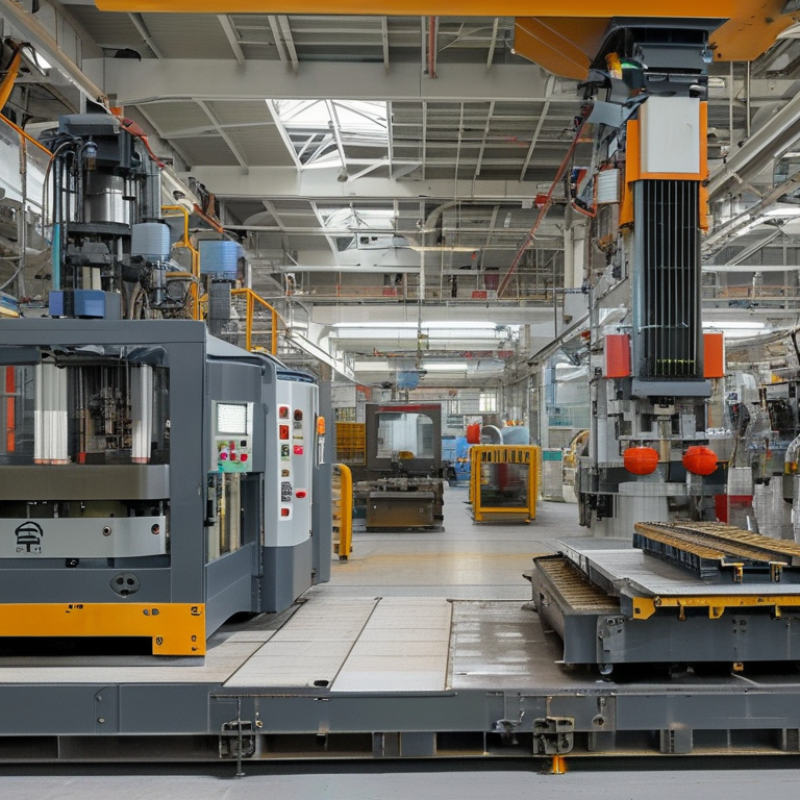
Definition and Role of Plastic Injection Molding Machines in China
Plastic injection molding machines are industrial systems that melt plastic pellets and inject the material into a shaped mold. After cooling, the mold opens and releases a finished component. In China, these machines support automotive parts, appliance housings, medical packaging, electronics, and everyday products. They convert digital designs into repeatable physical parts. The details matter.
A typical machine includes a hopper, heated barrel, screw, injection unit, clamping unit, and control system. The screw conveys and melts the material, while the clamp holds the mold under high pressure. Proper temperature, pressure, speed, and cooling time affect strength, appearance, and dimensional accuracy. A practical factory review also checks energy use, maintenance access, safety guarding, and production records. These points often reveal more than a machine’s advertised specifications.
Their role in China is broader than simple production speed. They connect material science, mold engineering, automation, and quality control within one manufacturing process. Stable machines can reduce scrap and support consistent large-volume output. Still, no machine is perfect. A setting that works for one mold may fail on another. Some factories may also overvalue speed and overlook cooling efficiency or operator training. That judgment deserves reflection. Reliable production requires trial runs, documented adjustments, and regular inspection of molded parts. A small flash edge or uneven surface can signal a deeper process problem.
China Top 10 Plastic Injection Molding Machine Manufacturers - Definition and Role of Plastic Injection Molding Machines in China
| No. | Evaluation Dimension | Typical Industry Data in China | Role of the Machine | Common Applications |
|---|---|---|---|---|
| 1 | Clamping Force | Approximately 500–10,000 kN for general-purpose machines; larger systems are available for automotive and industrial components. | Prevents the mold from opening during injection and determines the practical molding size. | Small household parts, packaging, automotive components, pallets, and large structural parts. |
| 2 | Machine Configurations | Hydraulic, all-electric, and hybrid configurations are widely used, with electric systems generally offering higher repeatability and cleaner operation. | Matches machine performance with production volume, precision requirements, operating cost, and factory conditions. | General manufacturing, medical products, electronics, precision packaging, and cleanroom production. |
| 3 | Injection Pressure and Speed | Maximum injection pressures commonly range from about 120 to 250 MPa, while high-speed models are designed for rapid filling and short cycles. | Controls melt filling, surface quality, weld-line formation, and the ability to mold thin-wall parts. | Thin-wall containers, electronic housings, medical components, caps, and precision parts. |
| 4 | Plastic Material Compatibility | Machines are commonly configured for PP, PE, ABS, PS, PC, PA, POM, PET, recycled polymers, and glass-fiber-reinforced materials. | Melts, mixes, meters, and injects thermoplastic materials into a mold with controlled temperature and pressure. | Packaging, consumer goods, electrical parts, engineering components, and transportation products. |
| 5 | Screw Diameter and Shot Size | Screw diameters typically extend from approximately 20 mm for small precision machines to more than 150 mm for large-volume molding. | Determines plasticizing capacity, shot volume, residence time, and suitability for different product weights. | Micro parts, laboratory components, thin-wall packaging, automotive trim, and large containers. |
| 6 | Molding Technologies | Available technologies include two-color molding, insert molding, overmolding, gas-assisted molding, foam molding, and PET preform molding. | Integrates multiple materials, decorative elements, inserts, or special internal structures into one production process. | Automotive interiors, handles, seals, consumer products, closures, and lightweight components. |
| 7 | Control and Automation | Modern systems use programmable controllers, touchscreen interfaces, closed-loop pressure control, robots, conveyors, and production-data connectivity. | Improves repeatability, reduces manual handling, records process data, and supports smart-factory integration. | High-volume production, unmanned cells, quality-sensitive parts, and multi-machine factories. |
| 8 | Energy Efficiency | Servo-hydraulic and all-electric designs can reduce idle energy use compared with conventional fixed-speed hydraulic systems; actual savings depend on cycle and load. | Lowers power consumption, heat generation, and operating costs during repeated production cycles. | Continuous production, energy-managed factories, clean manufacturing, and cost-sensitive operations. |
| 9 | Quality and Safety Standards | Export-oriented equipment is commonly designed with reference to ISO 20430, CE machinery requirements, electrical safety rules, and applicable national standards. | Supports safe operation, machine documentation, risk reduction, and acceptance in domestic and overseas markets. | Food packaging, medical devices, electronics, automotive supply chains, and export manufacturing. |
| 10 | Production Role in China | Plastic injection molding machines support large manufacturing clusters for packaging, appliances, electronics, automotive parts, medical products, and consumer goods. | Converts polymer pellets into repeatable, high-volume products while reducing unit cost and enabling complex geometries. | Domestic supply chains, contract manufacturing, export production, customized components, and mass production. |
Related Posts
-
How to Choose the Best Plastic Overmolding Supplier?
-
Best Injection Molding Machine Molds for Global Buyers?
-

Custom Solutions for Efficient Injection Molding Machine Molds in Global Industries
-
How to Choose the Best Plastic Overmolding for Your Needs?
-
Cost of Plastic Injection Molding Explained How to Save on Production Costs
-
Understanding the Essential Functions of Plastic Injection Machine Parts in Modern Manufacturing
Submit a quote request or book a design consultation
Plastimold Products is an end-to-end product development and manufacturing team. We provide product design, engineering, prototyping, tooling, plastic injection molding, assembly, packaging and fulfillment. We work with any size company from start-ups to enterprises from all around the world.
I have a product I want to manufacture
I have a product that is already designed and now needs to be manufactured.
I need a manufacturer to optimize my product for injection molding, help choose the correct material, and manage the product production.
I have tooling that I want to transfer or modify, or I need to produce new tooling.
I need design and engineering support
I have a product concept that I want to be designed and brought to market.
I have a product that needs to be reviewed, improved or DFM’ed.
I am looking for a manufacturer to provide an end-to-end solution, from design and development to inventory, marketing, and sales.

©2022 Plastimold Products - Privacy policy - Terms and Conditions