
China Top Heatsink Thermal Pad Suppliers for Global Buyers
Global electronics manufacturers are looking to China for reliable Heatsink Thermal Pad suppliers. The reason is practical: China offers broad material choices, competitive production capacity, and experience serving demanding electronics markets. Yet low price alone cannot prove product value. Thermal performance depends on thickness, compression, surface roughness, filler design, and assembly pressure.
Dr. Kaveh Azar, a recognized thermal-management specialist, has stated, “Thermal management is a system problem, not a component problem.” This view matters when evaluating a Heatsink Thermal Pad. A pad that performs well in laboratory data may behave differently inside a crowded power module. Small air gaps can remain around uneven surfaces. Excessive compression can also damage sensitive components.
Details matter.
This guide examines China-based suppliers through a buyer’s practical lens. It considers thermal conductivity, dielectric strength, hardness, rebound, tolerances, and long-term reliability. It also reviews sample policies, production controls, technical documentation, and communication quality. Buyers should request test reports and confirm whether the data reflects real operating conditions.
A supplier may present impressive figures. However, the test method may not match your application. That difference is easy to overlook. It can become expensive later.
The strongest suppliers usually support material selection, prototype testing, and design adjustments. They can explain why a 1.0-millimeter pad suits one heatsink, while a softer 0.5-millimeter pad suits another. Still, no supplier is perfect for every project. This comparison leaves room for careful verification, independent testing, and a little healthy doubt.
Thermal Pad Basics: 1–20 W/m·K Conductivity and 0.5–5 mm Thickness
China Top Heatsink Thermal Pad Suppliers for Global Buyers
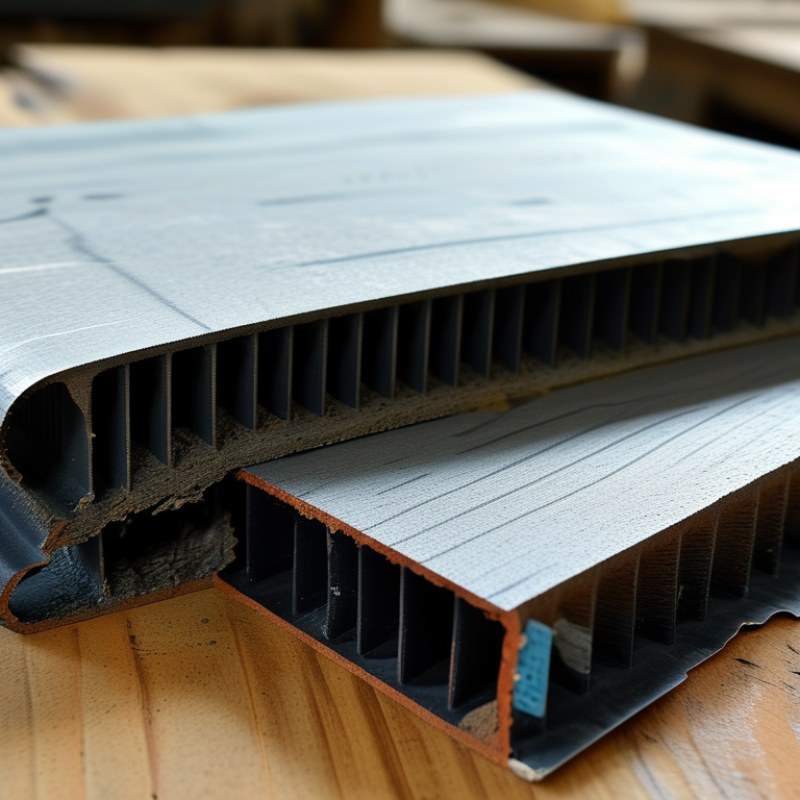
Thermal pads fill uneven gaps between a heatsink and a hot component. Their conductivity commonly ranges from 1 to 20 W/m·K. Lower grades suit modest heat loads and wider contact areas. Higher grades support power electronics, processors, and compact assemblies. However, conductivity alone can mislead. Contact pressure, surface flatness, and pad compression also affect real thermal performance.
Thickness usually falls between 0.5 and 5 mm. A 0.5 mm pad works well when surfaces are already close and smooth. Thicker pads can bridge larger gaps, but they may increase thermal resistance. They may also require more assembly force. Measure the actual gap, not the drawing alone. Manufacturing tolerances can surprise you.
During supplier evaluation, request test data, thickness tolerance, hardness, dielectric strength, and compression behavior. Ask whether conductivity testing follows a recognized method. Check samples under realistic pressure and operating temperatures. I have seen pads perform differently after repeated thermal cycling. That result deserves investigation, not excuses. Global buyers should also review packaging, shelf life, cutting accuracy, and batch traceability. A reliable supplier explains limitations clearly and supports sample validation before volume production.
Material Selection: Silicone, Acrylic, and Graphite Under ASTM D5470 Testing
China Top Heatsink Thermal Pad Suppliers for Global Buyers
Material choice decides more than thermal conductivity. It affects compression, aging, assembly speed, and surface contact. Silicone pads remain widely used because they conform to uneven heatsink surfaces. Acrylic pads can offer strong adhesion and thinner designs, but removal may damage delicate surfaces. Graphite spreads heat laterally and works well in compact electronics. However, it does not always fill air gaps without a compliant layer.
ASTM D5470 testing measures thermal impedance under defined pressure, temperature, and surface conditions. It does not predict every field application. A 2023 MarketsandMarkets report estimated the global thermal interface materials market at about USD 4.3 billion, with growth driven by power electronics, data centers, and electric vehicles. That demand increases pressure on Chinese suppliers to provide traceable test records, not only attractive conductivity figures. In practical sourcing, request test pressure, sample thickness, aging conditions, and lot identification. Numbers without test conditions are weak evidence.
Tips: Compare materials at the same thickness and pressure. Check dielectric strength for high-voltage assemblies. Ask for compression-set data after thermal cycling. Silicone may feel safest, yet its oil migration can become a concern. Graphite looks efficient, but handling can be unforgiving. I would also repeat ASTM D5470 testing on production samples. Supplier data can be correct, but still incomplete.
China Top Heatsink Thermal Pad Suppliers for Global Buyers
Material Selection: Silicone, Acrylic, and Graphite Under ASTM D5470 Testing
The chart compares representative through-plane thermal conductivity ranges commonly used when screening thermal interface pad materials. Higher conductivity generally supports improved heat transfer, while ASTM D5470 testing evaluates thermal resistance or thermal impedance under controlled pressure, thickness, and temperature conditions. Graphite values can vary significantly because of anisotropy and should be verified in the intended heat-flow direction.
Performance Criteria: Shore 00 Hardness, Compression, and UL 94 V-0 Ratings
China Top Heatsink Thermal Pad Suppliers for Global Buyers
For global buyers, Shore 00 hardness reveals how a thermal pad handles uneven surfaces. Softer pads conform around tiny gaps, burrs, and component height differences. However, extremely soft material may creep during assembly. I have seen pads squeeze sideways under repeated fastening. That detail can damage coverage near a narrow heatsink edge. Ask suppliers for Shore 00 test results, test temperature, and measurement standard. A single hardness number is not enough.
Compression performance deserves equal attention. Review compressibility at the planned thickness, pressure, and temperature. A 1 mm pad may need controlled compression to fill a 0.2 mm air gap. Excessive force can stress a ceramic package or bend a thin board. Compression set testing also matters after heat aging. The pad should recover sufficiently when clamping pressure changes. Some data sheets look precise. They still leave questions about long-term recovery.
UL 94 V-0 confirms flame resistance under a defined laboratory method, not thermal conductivity or service life. Request the exact material thickness used during testing. Check whether the rating applies to the finished pad, adhesive layer, and insulation film. Reliable suppliers should provide batch traceability, inspection records, and samples from current production. A practical evaluation includes cutting a sample, checking edge tearing, and measuring thickness at several points. My own test plans are rarely perfect, so I repeat measurements before approving a large order.
Supplier Verification: ISO 9001, RoHS, REACH, and Lot-Level Test Reports
China’s heatsink thermal pad suppliers should be verified through evidence, not polished brochures. The ISO Survey 2022 recorded more than 1.26 million ISO 9001 certificates worldwide. That figure shows the standard’s reach, but certification alone does not prove stable thermal performance. Buyers should check the certificate scope, issuing body, validity date, and manufacturing address. A factory making silicone sheets may not hold certification for final thermal pad assembly.
Request lot-level test reports for thermal conductivity, thickness, hardness, density, and dielectric strength. Each report should identify the production lot, test method, sample size, and laboratory conditions. ASTM and IEC methods can produce different results. Compare like with like. A reported 6 W/m·K value means little without its measurement method.
RoHS compliance should cover the ten restricted substance groups under the current EU framework. REACH verification also requires screening against the evolving SVHC Candidate List managed by the European Chemicals Agency. Ask for the declaration, test date, sample identity, and laboratory accreditation. Do not accept an undated “green” statement. It is weak evidence. Supplier audits should trace one carton back to raw-material records, mixing logs, curing data, and final inspection results. That process takes time. It also exposes gaps that certificates can hide. A common mistake is trusting one excellent sample. Review three or more recent lots before approving production. The evidence may still be imperfect, but unexplained variation deserves a documented corrective action.
China Top Heatsink Thermal Pad Suppliers for Global Buyers - Supplier Verification: ISO 9001, RoHS, REACH, and Lot-Level Test Reports
Evidence-based verification framework for thermal interface material suppliers
| Verification dimension | Relevant reference or requirement | Evidence to request | Recommended review frequency | Buyer acceptance check |
|---|---|---|---|---|
| Quality management system | ISO 9001:2015 | Current certificate, certification body, certificate number, validity dates, and manufacturing scope | Before approval and at certificate renewal | Confirm the certificate covers the actual production site and relevant thermal interface materials |
| Restricted substances | RoHS Directive 2011/65/EU and amendment (EU) 2015/863 | Material declaration or laboratory test report covering lead, mercury, cadmium, hexavalent chromium, PBB, PBDE, and four phthalates | At qualification, after formulation change, and according to risk level | Check report date, sample description, tested material, laboratory identity, and applicable limits |
| Chemical substance registration | REACH Regulation (EC) No. 1907/2006, including applicable SVHC communication duties | REACH declaration, current SVHC statement, and safety data sheet where applicable | At qualification and whenever the SVHC candidate list changes | Verify the declaration applies to the supplied grade, thickness, adhesive layer, liner, and packaging if included |
| Thermal conductivity | Declared value must be tied to a defined test method, specimen thickness, temperature, and conditioning procedure | Product datasheet plus laboratory report stating thermal conductivity in W/m·K and test conditions | Qualification and periodic or change-triggered validation | Do not compare values unless the test method, thickness, temperature, and sample preparation are comparable |
| Thermal resistance | Application-specific value based on thickness, contact pressure, surface roughness, and test configuration | Thermal impedance or resistance curve, test fixture details, and pressure range | During design validation and after material or process changes | Confirm the reported result represents the intended assembly rather than only the raw material |
| Thickness and dimensional tolerance | Approved drawing or purchase specification | Inspection standard, calibrated measuring equipment record, and dimensional inspection report | Every production lot or defined sampling plan | Check thickness, length, width, cut-outs, burrs, liner alignment, and tolerance against the approved drawing |
| Mechanical properties | Customer specification for hardness, compressibility, tensile or elongation behavior, as applicable | Lot test results with units, test conditions, sample count, and acceptance limits | Every lot for critical characteristics | Ensure the test method is suitable for the material type and that results are within the approved specification |
| Electrical insulation | Dielectric strength, volume resistivity, or breakdown voltage as required by the application | Test report identifying specimen thickness, electrode configuration, voltage, ramp rate, and result | Qualification and every lot where electrical isolation is safety-critical | Confirm electrical requirements are evaluated on the final supplied construction, including any carrier or adhesive layer |
| Lot-level release testing | Documented control plan and approved inspection sampling plan | Certificate of analysis or certificate of conformity linked to lot number, production date, quantity, and test results | Every shipped lot | Reject certificates that contain only generic datasheet values without lot identification or actual measured results |
| Traceability and change control | Documented batch traceability and customer notification process | Raw-material batch records, production records, retained-sample policy, and engineering-change procedure | Review during supplier audit and after every significant change | Confirm that material, process, equipment, factory, and subcontractor changes require documented approval |
| Packaging and storage | Approved packaging specification and product shelf-life requirements | Packaging drawing, label format, storage conditions, shelf-life statement, and transport protection requirements | Each shipment and periodic logistics review | Check lot label, manufacture date, quantity, moisture or contamination protection, and storage temperature and humidity instructions |
Global Sourcing: MOQ, Lead Time, Incoterms, and Three-Year Cost Analysis
Global buyers should evaluate thermal pad suppliers beyond quoted unit prices. During sourcing, confirm thermal conductivity, thickness tolerance, hardness, dielectric strength, and compression recovery. A 1.0 mm pad rated at 6 W/m·K may perform poorly if its actual thickness varies under assembly pressure. Ask for production samples, inspection records, and test conditions before approving a supplier.
MOQ directly affects inventory risk. A 5,000-piece MOQ may reduce pricing, but it can tie up cash for slower projects. Discuss split shipments, mixed sizes, or a pilot order of 500 pieces.
Standard lead time often ranges from two to five weeks, while custom cutting and tooling may add ten working days. Build buffer time for approval delays. Delays happen.
Incoterms also change the real cost. Under EXW, the buyer manages pickup, export handling, and inland transport. FCA can provide clearer responsibility at the factory gate, while DDP offers convenience but requires careful customs and tax verification.
For a three-year cost analysis, include unit price, freight, duties, inspection, storage, replacement pads, and production downtime. A slightly cheaper pad may create higher costs if compression changes after repeated thermal cycles.
I once underestimated packaging damage during humid transit; the purchase price looked attractive, but reinspection and replacement erased the savings. Use total landed cost, supplier audits, and annual performance reviews instead of relying on one quotation.
Article Source:
Submit a quote request or book a design consultation
Plastimold Products is an end-to-end product development and manufacturing team. We provide product design, engineering, prototyping, tooling, plastic injection molding, assembly, packaging and fulfillment. We work with any size company from start-ups to enterprises from all around the world.
I have a product I want to manufacture
I have a product that is already designed and now needs to be manufactured.
I need a manufacturer to optimize my product for injection molding, help choose the correct material, and manage the product production.
I have tooling that I want to transfer or modify, or I need to produce new tooling.
I need design and engineering support
I have a product concept that I want to be designed and brought to market.
I have a product that needs to be reviewed, improved or DFM’ed.
I am looking for a manufacturer to provide an end-to-end solution, from design and development to inventory, marketing, and sales.

©2022 Plastimold Products - Privacy policy - Terms and Conditions

