
7 Best Conveyor Drum Pulley Manufacturers for Global Buyers

Selecting a conveyor drum pulley is not a catalogue exercise. It affects belt tracking, load transfer, maintenance intervals, and the safety of nearby workers. A global buyer must compare more than price. Shell thickness, shaft design, lagging, bearing arrangement, balance, and protective coatings all matter. So does the supplier’s ability to document materials and dimensional checks. Small differences can become loud problems on a dusty plant floor.

Conveyor engineer R. Todd Swinderman has long emphasized practical conveyor-system design. In paraphrase, his useful reminder is: “Reliable performance depends on the whole system, not one component.” That principle applies to every Conveyor Drum Pulley Manufacturer on a shortlist. A strong supplier should explain how its pulley fits the belt, duty cycle, and operating environment. Ask for drawings, inspection records, material specifications, and clear lead-time commitments. If answers stay vague, pause.

This guide reviews seven manufacturers for global buyers, with attention to product range, engineering support, production capability, and service reach. These details help frame a fair comparison. They do not guarantee a perfect fit. Buyer requirements vary, and published claims still need verification. A polished brochure is not a load test. Use the list as a starting point, then confirm critical specifications directly with each manufacturer. One overlooked detail can matter.
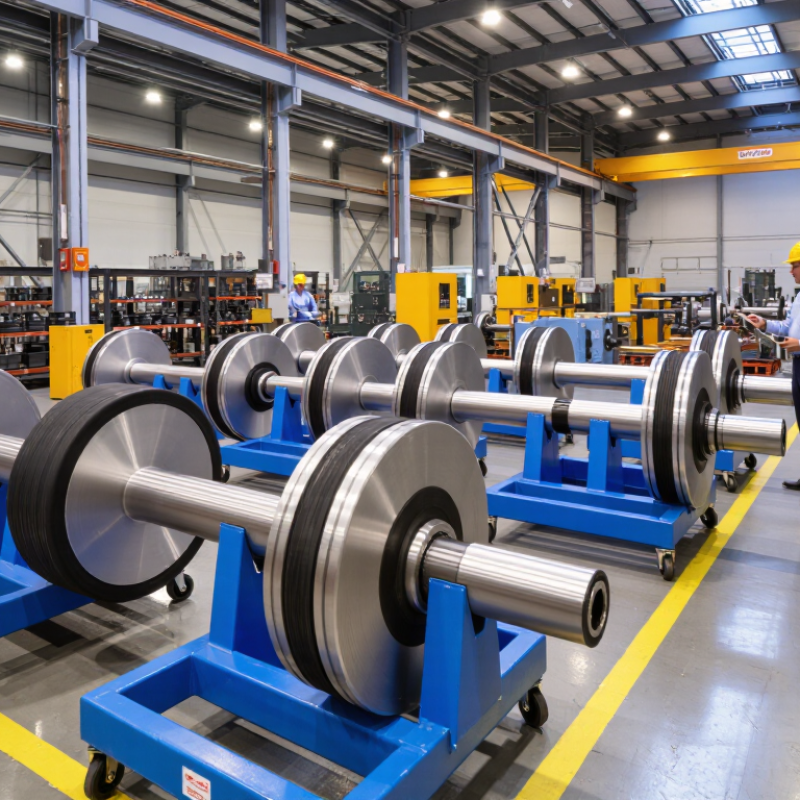
7 Best Conveyor Drum Pulley Manufacturers for Global Buyers

What Is a Conveyor Drum Pulley and Why It Matters

A conveyor drum pulley is the rotating cylinder that drives or redirects a conveyor belt. It transfers motor torque through the shaft and maintains belt movement under load. Its surface, bearings, welds, and shaft design directly influence conveyor reliability.

In practical inspections, pulley damage often appears as lagging wear, shaft bending, or loose bearing housings. A worn pulley can cause belt slip, tracking problems, and uneven material flow. Sometimes, the problem is not the pulley itself. Incorrect belt tension or poor alignment may create similar symptoms. This is easy to overlook.

Global buyers should examine manufacturing records, material certificates, dynamic balancing results, and load calculations. Pulley shells need suitable steel thickness and accurate welding control. Lagging should match moisture, friction, and operating temperature. Sealed bearings help in dusty environments, but they still require correct installation and regular checks. Ask manufacturers for dimensional drawings, inspection reports, and replacement support. Delivery capacity matters too, especially when a shutdown depends on one component. A lower purchase price may hide weak quality control or limited engineering support. That assumption deserves review. Experienced suppliers can explain design limits clearly, rather than promising that one pulley fits every conveyor.

7 Best Conveyor Drum Pulley Manufacturers for Global Buyers — What Is a Conveyor Drum Pulley and Why It Matters

Common nominal conveyor belt widths (mm) — a key input when specifying a drum pulley.

A conveyor drum pulley drives, redirects, or supports the belt. Belt width is one of the basic dimensions used when selecting a compatible pulley; the required pulley face width and diameter also depend on the conveyor design, belt construction, loading, and operating conditions. The widths shown are common nominal metric belt sizes listed in ISO 14890.

How to Evaluate Conveyor Drum Pulley Manufacturers Worldwide

How to Evaluate Conveyor Drum Pulley Manufacturers Worldwide

A reliable evaluation starts with operating conditions, not a catalogue image. Share belt width, speed, conveyed material, moisture, temperature, and expected duty hours. Ask manufacturers to explain their pulley diameter, shaft design, lagging choice, and bearing arrangement against those conditions. Request drawings, material certificates, balance records, and inspection reports for comparable projects. The CEMA Belt Conveyors for Bulk Materials handbook provides established guidance on conveyor design; use it as a technical reference, not a substitute for project-specific engineering. The World Steel Association reported global crude steel production of 1,892.1 million tonnes in 2023. That figure shows the scale of steel supply, but does not prove a pulley’s quality. Verify traceability for the actual components.

Tips: Ask for a sample inspection plan. Check weld procedures, machining tolerances, and dynamic balancing limits. Confirm the stated limits in writing. Compare warranty terms, spare-part lead times, and packaging for sea freight. A low quotation may exclude testing or protective packing. Clarify those costs.

For overseas suppliers, assess communication and evidence as carefully as price. Request references for similar loads and operating environments, then ask what failed and how the design changed. Review the factory’s quality records and clarify who performs final inspection. If possible, arrange an independent inspection before shipment. No checklist catches everything. I would also allow time for a technical review; rushed decisions can leave small but costly gaps.

Seven Leading Conveyor Drum Pulley Manufacturers Compared

Seven Leading Conveyor Drum Pulley Manufacturers Compared

Global buyers should compare more than quoted prices. A pulley must match belt tension, shaft loading, lagging needs, and operating environment. The seven manufacturer profiles reviewed here represent suppliers from North America, Europe, China, India, Türkiye, Australia, and South Africa. Each region shows a different strength: engineered customization, heavy-duty fabrication, high-volume production, mining experience, or responsive field service.

According to MarketsandMarkets’ 2023 Conveyor System Market report, the sector could grow from about USD 7.9 billion in 2023 to USD 11.5 billion by 2028. That growth increases demand for dependable drum pulleys. CEMA’s Belt Conveyors for Bulk Materials guidance also stresses correct pulley selection, belt alignment, and load analysis. Buyers should request shaft calculations, weld inspection records, balancing results, and rubber-bonding data. ISO 9001 certification helps, but it does not replace product testing.

The comparison found clear trade-offs. European suppliers often provide precise engineering, while Asian manufacturers may offer shorter production costs and broader capacity. Mining-focused suppliers usually understand abrasive ore, dust, and extreme impact better. Service-led manufacturers can reduce replacement delays through local stock and technicians. Still, documentation quality varies. Some suppliers present impressive catalogs but limited fatigue-test evidence. That weakness matters. A buyer should inspect drawings, warranty terms, and references from similar conveyors before signing. A cheaper pulley can become expensive after one premature bearing failure.

Key Product and Service Differences for Global Buyers

For global buyers, conveyor drum pulley manufacturers differ less by catalogue size than by engineering depth. A pulley for a dusty quarry needs different lagging, sealing, and shaft protection than one serving a clean warehouse. Ask for drawings, load calculations, balance grades, and material traceability—not just a quoted diameter. Small details matter. A well-made shell can still fail early if the bearing arrangement or weld inspection is poorly matched to the duty cycle.

Service coverage is another dividing line. Some suppliers provide installation guidance, spare-parts planning, and failure analysis; others mainly ship finished components. That difference matters when a replacement pulley must fit an existing conveyor with limited downtime. Check whether the manufacturer can document face width, belt speed, operating temperature, and expected load, then confirm who handles technical questions across time zones. Response promises can sound reassuring, but test them with a specific drawing review.

Market context supports careful sourcing, though it does not rate individual pulley makers. Grand View Research valued the global conveyor belt market at about US$6.3 billion in 2023 and forecast growth through 2030. This broader market figure is not a drum-pulley forecast, but it signals sustained investment in conveying equipment. Buyers should compare warranty terms, inspection records, and delivery commitments alongside price. I would still leave room for doubt: a polished specification sheet cannot replace a site trial under real material and weather conditions.

7 Best Conveyor Drum Pulley Manufacturers for Global Buyers - Key Product and Service Differences for Global Buyers Comparison of seven supplier profiles by typical product focus, engineering support, and international service. Profiles are anonymized; listed specifications are indicative market ranges, not verified claims about individual manufacturers.
Supplier Profile Typical Product Focus Common Size Range Construction and Lagging Options Engineering and Quality Services International Buyer Considerations Best Fit
Heavy-duty mining specialist Drive, tail, bend, and take-up pulleys for high-load bulk-material conveyors. Commonly about 500–1,600 mm in face width; custom dimensions depend on belt and load design. Fabricated steel shells; plain, diamond-groove, or ceramic lagging options; shaft and hub designs selected for the duty. May provide pulley calculations, drawings, weld inspection, balancing, and load-specific design review. Confirm applicable design standards, inspection documentation, wear-part availability, and export packing requirements. Large mines, ports, and high-capacity material-handling systems.
Bulk-terminal and port equipment supplier Drum pulleys for long conveyors handling ores, coal, grain, aggregates, or other bulk materials. Often engineered to project dimensions; conveyor belt widths may be roughly 800–2,400 mm or more. Heavy fabricated bodies; lagging selected for traction, abrasion resistance, and operating conditions. Typically coordinates interface dimensions, pulley schedules, technical submittals, and project-specific inspection plans. Check project references, corrosion protection, documentation language, and coordination with conveyor-system contractors. Port expansions, terminals, and large bulk-handling projects.
Standard-duty industrial manufacturer Drive and non-drive pulleys for general manufacturing, warehousing, and moderate-duty conveying. Commonly available in smaller and mid-range diameters; final dimensions vary by belt width and duty. Welded or fabricated steel designs; bare, rubber-lagged, or other standard surface options may be available. May offer standard drawings, basic dimensional checks, and routine balancing or inspection. Compare standard lead times, spare-parts support, minimum order quantities, and conformity documents. Routine industrial conveyors where standard configurations meet the design requirements.
Custom-engineered pulley workshop Made-to-order drum pulleys for non-standard interfaces, replacement projects, and retrofit work. Project-specific; dimensions are usually developed from drawings, samples, or verified site measurements. Material, shaft, hub, and lagging choices can be tailored to the application and existing equipment. Can support reverse engineering, dimensional surveys, manufacturing drawings, and custom inspection plans. Provide complete interface data and clarify drawing ownership, tolerances, approval steps, and change control. Legacy equipment, unusual layouts, and replacement pulleys with non-standard dimensions.
Rubber-lagging and traction specialist Drive pulleys where grip, water shedding, or protection of the pulley shell is a key requirement. Size is selected around belt width, wrap angle, transmitted torque, and operating conditions. May offer plain or grooved rubber lagging and other application-specific lagging materials; bonding quality is important. May advise on lagging selection, surface preparation, bonding, and inspection of the finished lagging. Ask about lagging compound data, attachment method, repair options, and suitability for the conveyed material and environment. Wet, dusty, or traction-sensitive drive applications.
OEM and conveyor-system partner Pulleys supplied as part of a wider conveyor package or matched to a specific conveyor design. Determined by the system design, belt specification, loading, and equipment interfaces. Options are generally coordinated with the complete conveyor package and its maintenance strategy. May provide system-level engineering, interface checks, installation guidance, and coordinated documentation. Clarify whether the pulley is manufactured in-house or sourced, and establish responsibility for warranty and technical support. Buyers seeking one point of coordination for a complete conveyor package.
Export-oriented project manufacturer Drum pulleys built for overseas projects, distributors, and international replacement orders. Custom project sizes; available capacity and transport limits should be confirmed for each order. Specifications can often be matched to buyer requirements, subject to confirmed materials and production capability. May support export documentation, inspection coordination, packing specifications, and drawing approval workflows. Verify shipping terms, delivery schedule, export packing, certificate requirements, and after-sales response arrangements. International procurement teams managing cross-border projects or multi-site sourcing.

How to Choose the Right Manufacturer for Your Conveyor System

Choosing a conveyor drum pulley manufacturer starts with the duty, not the catalogue. Share belt width, belt speed, material load, startup frequency, and ambient conditions. A pulley moving wet aggregate faces different risks from one handling dry cartons. Ask for drawings that show shell thickness, shaft dimensions, bearing arrangement, weld details, and lagging options. Small omissions matter. A shaft that looks adequate on paper may deflect under impact loading.

Check how the manufacturer verifies performance. ISO 281 defines the L10 bearing life rating: the expected life that 90% of a sufficiently large group of identical bearings will reach or exceed under stated conditions. It is a useful comparison, not a promise of service life; contamination, misalignment, and shock loads can shorten it. Request the assumptions behind the calculation, plus material certificates, weld inspection records, and runout tolerances. CEMA’s belt conveyor engineering guidance can help frame pulley selection and system loads. References from installations with similar duty are valuable, too. Ask what failed, not only what worked. That question can feel awkward, but it often reveals whether the supplier understands maintenance in the field.

Submit a quote request or book a design consultation

Plastimold Products is an end-to-end product development and manufacturing team.  We provide product design, engineering, prototyping, tooling, plastic injection molding, assembly, packaging and fulfillment.  We work with any size company from start-ups to enterprises from all around the world.

I have a product I want to manufacture

I have a product that is already designed and now needs to be manufactured. 

I need a manufacturer to optimize my product for injection molding, help choose the correct material, and manage the product production.

I have tooling that I want to transfer or modify, or I need to produce new tooling.

I need design and engineering support

I have a product concept that I want to be designed and brought to market.

I have a product that needs to be reviewed, improved or DFM’ed.

I am looking for a manufacturer to provide an end-to-end solution, from design and development to inventory, marketing, and sales.
